Description
Reciprocating Blades
5 Pack
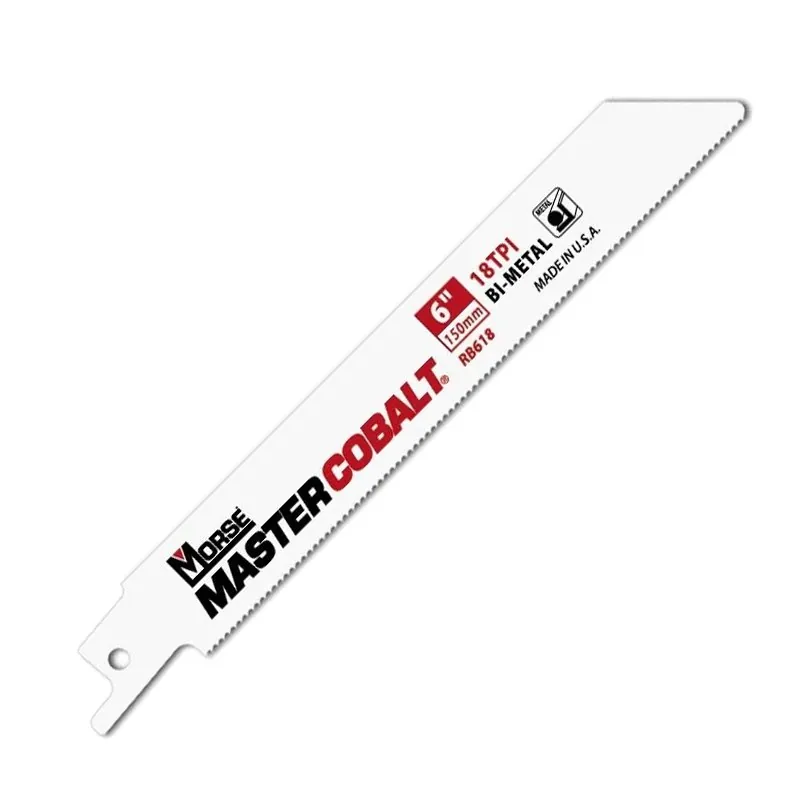
Length: 152mm (6″)
Width: 20mm (3/4″)
TPI: 14
Blade thickness: 0.9mm (0.035″)
Material it can cut: Metal
About this 152mm 14 TPI metal blade
Five 152mm (6″) reciprocating saw blades for metal, each 20mm wide and 0.9mm thick with a 14 TPI pitch. The 152mm length is the everyday size for most cordless and corded reciprocating saws: long enough to get through typical pipe and section, short enough to stay manageable.
What 14 TPI is good at
Among metal pitches, 14 TPI sits at the coarse end. Fewer, larger teeth take a bigger bite and clear swarf freely, so it cuts thicker material faster than a fine blade. Good matches include:
- Heavier-wall steel pipe and tube.
- Solid bar, angle and flat bar in medium to thick sections.
- Bolts, studs and rusted fixings during maintenance or dismantling.
As a rule, keep at least three teeth in the material at any time. If the section is too thin for that, step up to 18 or 24 TPI.
Tips for a cleaner cut
Keep the shoe pressed firmly against the work to cut down on vibration, start the cut at a slow speed, and let the saw’s weight do most of the feeding. A thin 0.9mm blade will bend if it is levered, so avoid twisting the saw mid-cut.
How this blade sits in the 152mm metal range
Within our 152mm metal blades, 14 TPI is the coarsest pitch and the quickest through thicker material. Pair that with the flexible 0.9mm body and you have a blade suited to cutting steel tube, angle and solid bar where you also need to get close to a surface.
For thinner walls, step finer to the 152mm 18 TPI blade. If the blade bends too much on heavy cuts, the 152mm 1.3mm 14 TPI blade offers the same pitch on a stiffer body, and the 203mm 14 TPI blade adds reach for larger sections.
How to check this is the right blade
Check that your existing blade measures 152mm long and 20mm across, then count the teeth in one inch to confirm 14. The metals TPI chart lists suggested pitches by thickness, and our which TPI do I need guide covers the basics.
Frequently asked questions
How many teeth should be in contact when cutting tube?
Aim for at least three teeth in the wall at any time. If fewer teeth are in contact, the blade tends to snag; tilting the saw or choosing a finer pitch helps.
14 TPI or 18 TPI for general steel?
For thicker sections choose 14; for medium-gauge tube and general fabrication 18 is the safer all-round choice.
Why does my blade bend in the cut?
Usually because of side pressure or a slack shoe. Keep the saw in line with the cut and let it work at its own pace.
Browse our other reciprocating saw blades.
Reviews
There are no reviews yet.