Description
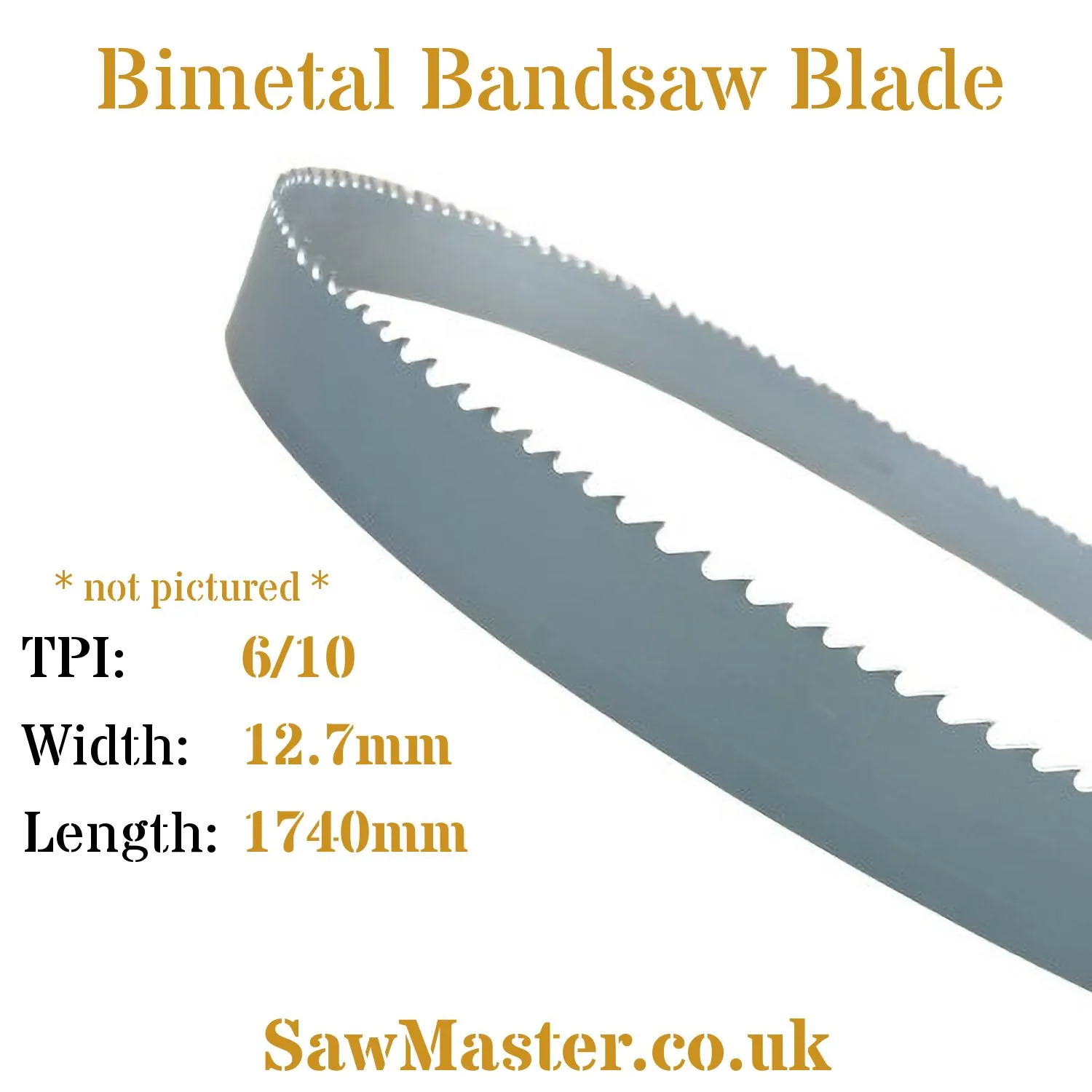
A made to order Bimetal bandsaw blade
Material: Bimetal
Length: 1745 mm
Width: 12.7 mm
TPI: 6/10
Not quite right?
Order a custom size Bandsaw Blade
Bimetal bandsaw blades represent a significant advancement in cutting technology, offering unmatched performance and durability compared to traditional carbon blades. This blade is crafted from two distinct materials that are seamlessly welded together, transforming cutting applications across various industries.
What this 1745mm 6/10 TPI blade is for
This 1745mm x 12.7mm (1/2″) bimetal bandsaw blade has a 6/10 TPI variable pitch. Instead of evenly spaced teeth, the pitch changes along the blade between 6 and 10 teeth per inch. The varied spacing helps reduce vibration and noise and lets one blade handle a wider range of section sizes. The bimetal build pairs high-speed steel teeth with a flexible alloy steel back.
That combination makes it a practical general workshop blade for metal: medium solid bar, thicker-walled tube, angle, channel and flat in mild steel, stainless steel and non-ferrous metals. With tooth spacing of roughly 2.5mm to 4mm, aim for material at least 8-12mm thick to keep three teeth engaged; for thin-wall tube go finer, and for large solid bar go coarser.
The 12.7mm width suits straight cuts and gentle curves. A 1745mm length is common on smaller and mid-size vertical and horizontal workshop bandsaws – check your manual for the exact figure.
How to check this is the right blade
Make sure your old blade is 1745mm long and 12.7mm wide, measured from the tooth tips to the back edge. Then check the pitch varies between about 6 and 10 teeth per inch. Our guides how are bandsaw blades measured and which TPI do I need explain both checks in more detail.
Frequently asked questions
How do I count TPI on a variable pitch blade?
Count the teeth over a few inches and look at the closest and widest gaps. The two numbers (6 and 10) describe the coarsest and finest spacing on the blade. Our variable pitch TPI guide explains more.
Will this blade cut wood?
Yes, it will cut timber and plastics, but its main strength is metal. For wood-only work a carbon blade is a cheaper option.
Reviews
There are no reviews yet.