Description
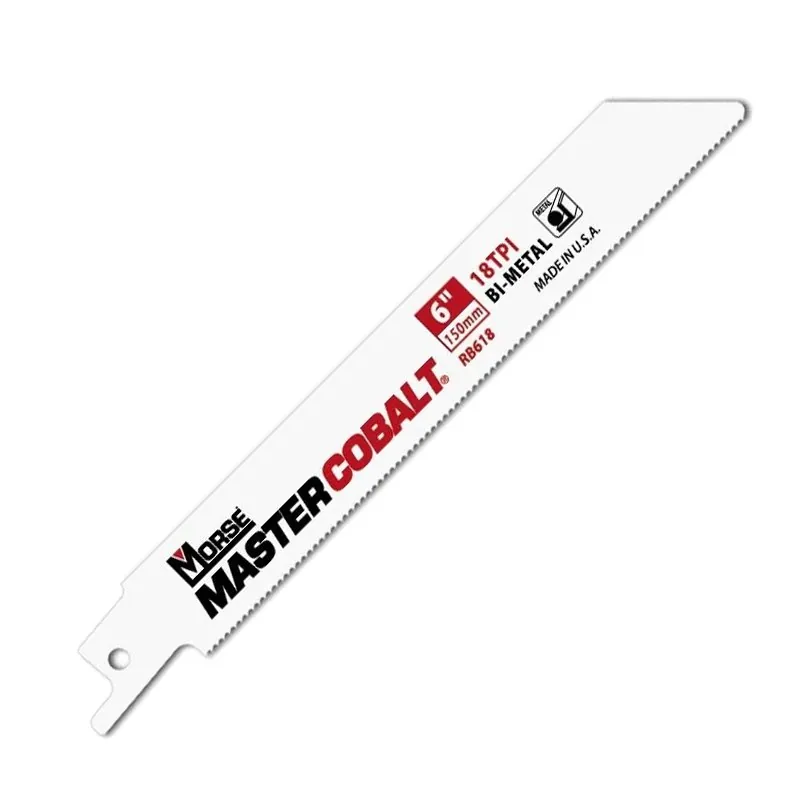
Reciprocating blades:
5 Pack
Length: 229mm (9″)
Width: 20mm (3/4″)
TPI: 18
Blade thickness: 0.9mm (0.035″)
Material it can cut: Metal
What this blade is for
This 5 pack holds Morse reciprocating saw blades 229mm (9″) long, 20mm wide and 0.9mm thick, with a fine 18 TPI tooth pitch. They are listed for metal.
The fine 18 TPI pitch, with teeth about 1.4mm apart, is designed for thin material: sheet steel, conduit, trunking, ducting and thin-wall tube. More teeth in contact means less snatching and a cleaner edge on thin metal. For thicker solid sections, a 14 TPI blade clears swarf faster.
The 229mm length gives the extra reach to get across wider ducting, larger-diameter thin-wall pipe or into recessed areas. As it is longer and fairly thin, keep the saw’s shoe firmly against the work to limit flex and vibration.
Choosing the right 229mm metal blade
With 18 TPI, this 229mm blade keeps more teeth in contact on medium and thin-wall tube while giving reach across larger pipe and section. It is a good choice for plumbing, electrical and fabrication work where long cuts are needed through thinner metal.
For thicker material at this length, the 229mm 14 TPI blade cuts faster. If you need a stiffer blade, the 229mm x 25mm 1.3mm 18 TPI blade is wider and thicker, and the 254mm 18 TPI blade adds a little more reach.
How to check this is the right blade
Check your old blade for the 229mm overall length and 20mm width, and count the teeth over one inch: there should be 18 fine, evenly spaced teeth. For the reasoning behind tooth choice, see our how blades are measured and which TPI do I need guides.
Frequently asked questions
Can I cut cast iron pipe with this blade?
A fine metal pitch can cut cast iron pipe, but cast iron is hard and abrasive, so expect slower progress and quicker tooth wear. Use a moderate speed and steady pressure.
What is an 18 TPI reciprocating blade used for?
It is used for thin metal, such as sheet, conduit, ducting and thin-wall tube, where a fine tooth pitch keeps enough teeth in the cut.
Does a longer blade cut faster?
Not by itself. A longer blade gives more reach, but cutting speed depends mainly on tooth pitch, stroke speed and the material.
Reviews
There are no reviews yet.