Description
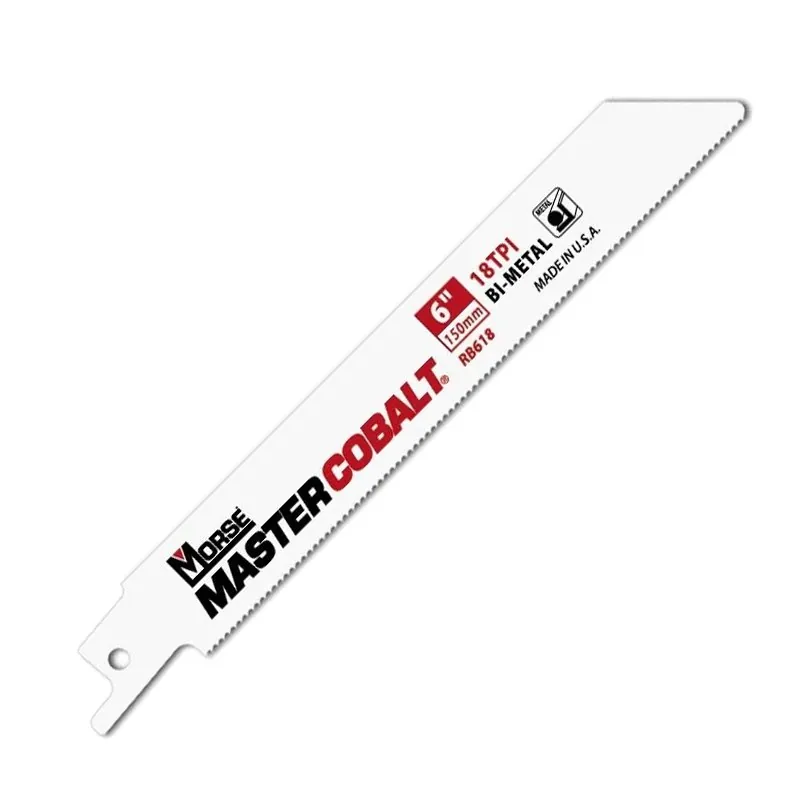
Reciprocating Blade
1 Pack
Length: 305mm (12″)
Width: 20mm (3/4″)
TPI: 18
Blade Thickness: 0.9mm (0.035″)
Material it can cut: Metal
This 305mm (12″) 18 TPI metal-cutting reciprocating saw blade from Morse combines a versatile metal pitch with the longest reach in this range. The 20mm wide, 0.9mm thick body carries 18 teeth per inch, a pitch that suits most medium-wall metal work.
What this 305mm metal blade suits
- Larger pipe and tube – medium-wall steel, copper and plastic pipe, including diameters a short blade cannot reach through.
- Angle, channel and box section – tidy cuts in medium-gauge structural metal.
- Strip-out and dismantling – the 305mm length reaches behind brackets and through fixings in awkward places.
Getting the most from a long blade
A long 0.9mm blade can bow if it is forced, so keep the saw shoe pressed firmly against the work, use a steady feed and a slower stroke speed on metal. Use a cutting lubricant on stainless and harder steels where practical, and change the blade as soon as cutting slows noticeably.
How to check this is the right blade
Measure the largest section you need to cut through – if a shorter blade would not reach right through with the shoe in contact, the 305mm length is the one to choose. Then check the wall thickness: at least three teeth should be in the material. Thinner walls call for a 24 TPI blade; thick solid sections cut faster with a coarser pitch. Our guide Which TPI do I need? explains the rule, and the full range is under reciprocating saw blades.
Where the 305mm length helps most
The extra reach is most useful when the work is bigger than the stroke of a short blade, or when you need to cut flush and the body of the saw cannot get close. Examples include cutting through large-diameter pipe in one pass, reaching through a run of brackets, or cutting fixings behind panels. For small sections, a shorter blade is stiffer and easier to control, so it is worth keeping both lengths to hand. On the 18 TPI pitch, aim to keep at least three teeth in the cut and ease off pressure as the blade breaks through to avoid snatching.
Frequently asked questions
Does a longer blade flex more?
Yes, a long blade bends more easily if forced. Let the saw do the work and keep the shoe against the material.
Can I use this blade on wood?
It will cut wood, but slowly; for timber a wood or hybrid blade is much faster.
Reviews
There are no reviews yet.