Description
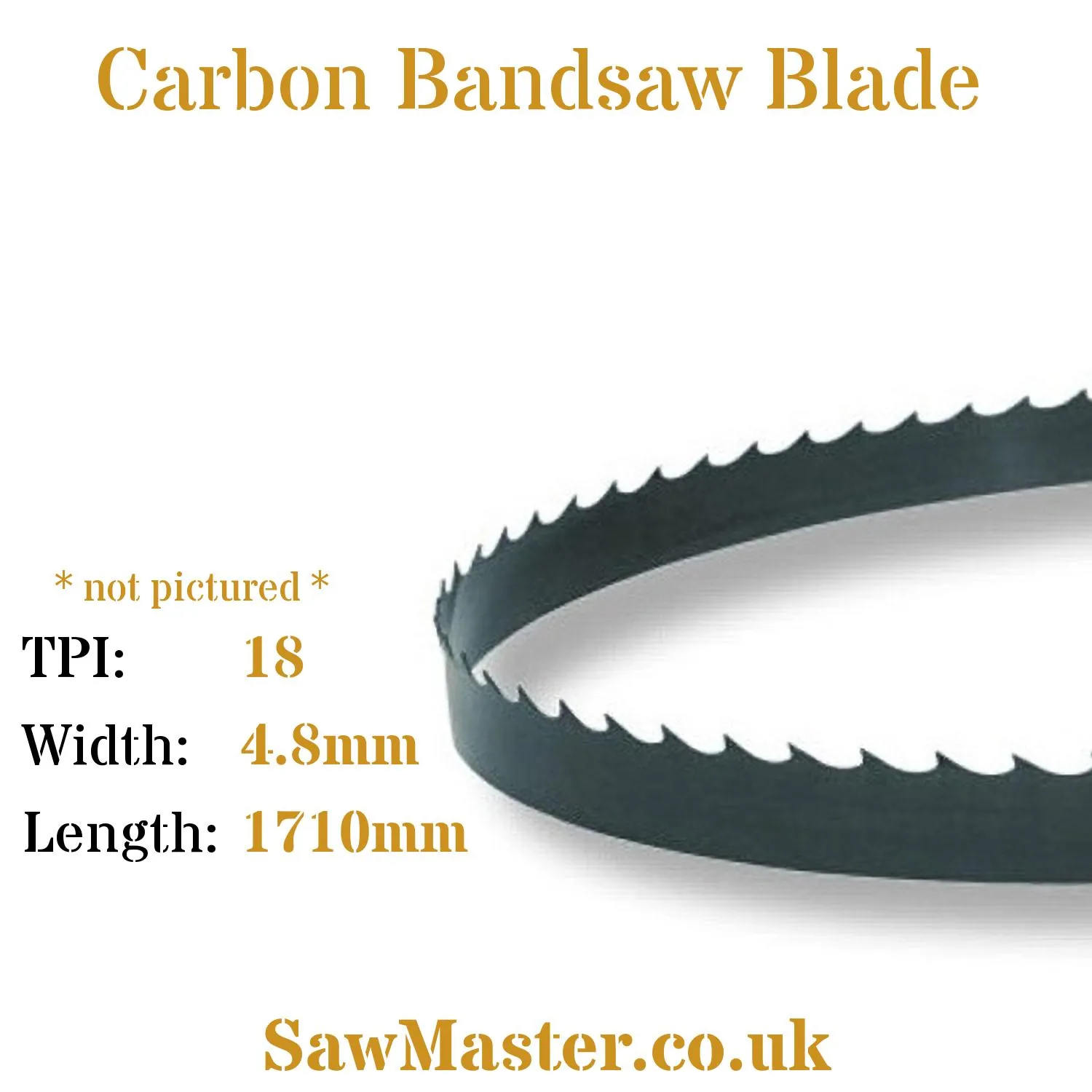
A made to order Carbon bandsaw blade
Material: Carbon
Length: 1715mm
Width: 4.8mm (3/16″)
Teeth Per Inch: 18
Not quite right?
Order a custom size Bandsaw Blade
Carbon bandsaw blades are vital tools in a range of industries due to their precision and efficiency in cutting various materials such as wood, metal, and plastic. These blades are meticulously forged from high-carbon steel, renowned for its durability, toughness, and edge retention. Their composition primarily consists of carbon steel, offering benefits such as resistance to wear and heat accumulation, thus ensuring long-lasting sharpness and consistent performance even in demanding conditions.
About this 1715mm 4.8mm 18 TPI carbon blade
This is a carbon bandsaw blade, 1715mm long and 4.8mm (3/16″) wide, with 18 teeth per inch. It is a fine-tooth blade for thin materials, where a coarse blade would snatch, splinter or chip the edge.
With 18 TPI the teeth are only about 1.4mm apart, so material from roughly 4mm thick keeps three teeth engaged. It is well suited to thin plywood, hardboard, laminates, acrylic and other plastic sheet, and thin soft non-ferrous sections such as aluminium or brass. The fine pitch leaves a smooth edge, though it cuts more slowly in thicker stock.
The 4.8mm width allows fairly tight curves, so you can cut shaped parts and templates from thin sheet. A 1715mm length is typical of benchtop and small workshop bandsaws.
As a carbon blade, it is the economical choice for wood, plastics and soft non-ferrous work. For regular steel cutting a bimetal blade will last far longer.
How to check this is the right blade
Check the length printed on your machine plate or on the old blade, and confirm it is 1715mm. Measure the width across the band from the tooth tips to the back edge: it should be 4.8mm. Then count the teeth over 25mm (one inch) and you should find 18. Our guides how are bandsaw blades measured and which TPI do I need explain each check step by step.
Why is my 18 TPI blade burning thick wood?
The small gullets fill with sawdust in deep cuts, which builds heat. Use a coarser pitch for thick timber and keep this blade for thin material.
Is this blade good for acrylic?
A fine pitch suits thin plastic sheet. Feed steadily and avoid stopping mid-cut, as heat can soften the plastic around the blade.
Reviews
There are no reviews yet.