Description
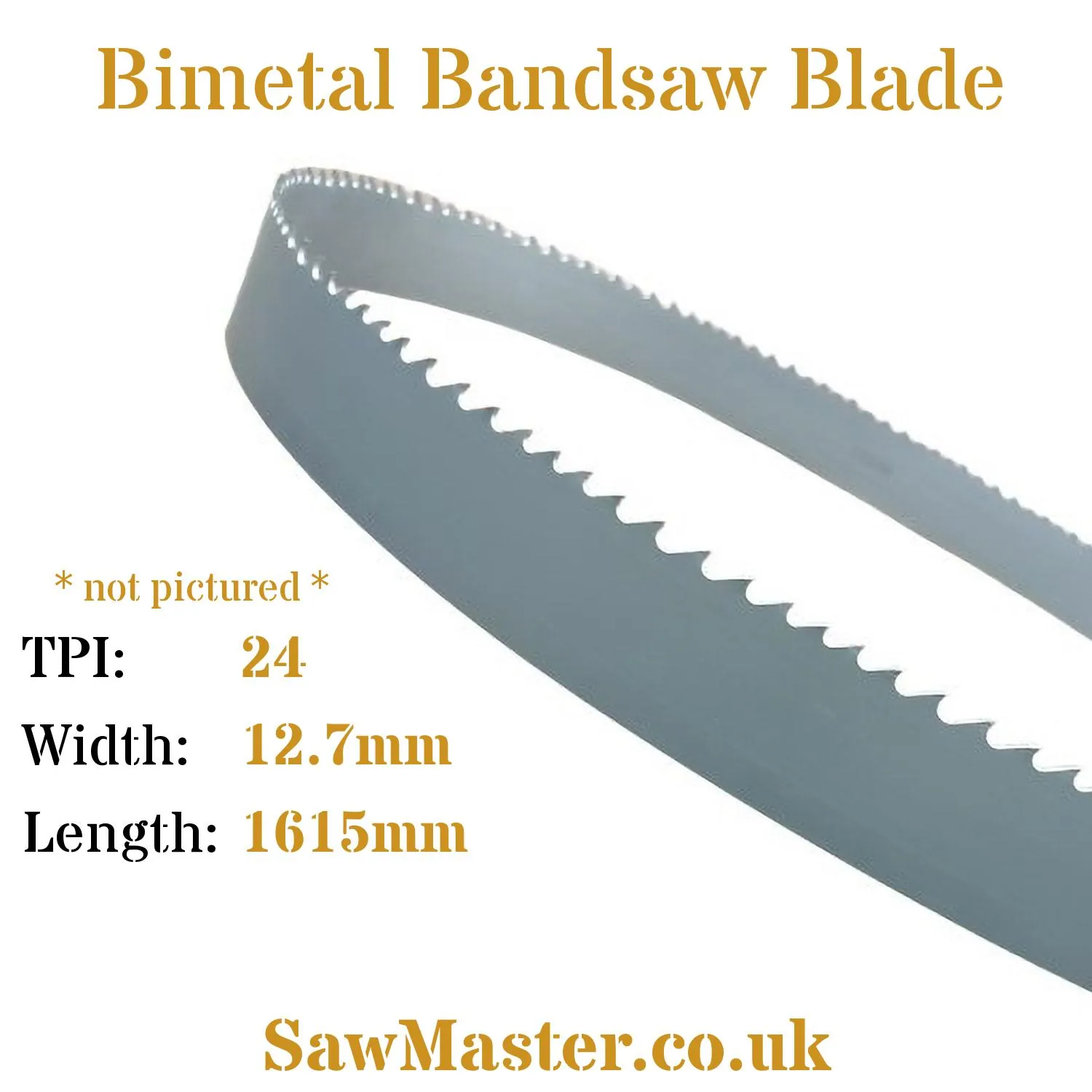
A made to order Bimetal bandsaw blade
Material: Bimetal
Length: 1615 mm
Width: 12.7 mm
TPI: 24
Not quite right?
Order a custom size Bandsaw Blade
Bimetal bandsaw blades signify a remarkable advancement in cutting technology, providing unmatched performance and durability in comparison to traditional carbon blades. Constructed from two distinct materials that are expertly welded together, bimetal blades transform cutting operations across various sectors. At their core, bimetal blades are designed with a combination of high-speed steel (HSS) and a supporting spring steel. This innovative design endows the blade with exceptional attributes, making it highly preferable in industrial environments.
What this 1615mm bimetal blade is for
This 1615mm x 12.7mm (1/2″) bimetal bandsaw blade has a fine 24 TPI pitch. The high-speed steel teeth hold their edge when cutting metal, and the alloy steel back gives the flexibility a band needs to run over the wheels without cracking.
A 24 TPI blade is built for thin material. With teeth around 1mm apart, several teeth share the load on thin-wall box section, conduit, tube, light angle and sheet, which reduces snagging and leaves a neat edge. The usual rule is at least three teeth in the cut, which works out at about 3mm of material for this pitch. For heavier walls and solid bar, choose a coarser or variable pitch so the gullets can clear the chips.
The 12.7mm width suits straight cuts and mild curves in metalwork. 1615mm is a length found on smaller vertical and portable metal-cutting bandsaws; check your machine’s plate or manual to be sure.
How to check this is the right blade
Check that the blade you are replacing is 1615mm long and 12.7mm wide (tooth tip to back edge). Count the teeth over one inch (25mm): a 24 TPI blade has 24. Our guides how are bandsaw blades measured and which TPI do I need explain both checks in more detail.
Frequently asked questions
Is 24 TPI right for stainless steel tube?
For thin-wall stainless tube a fine pitch like this is a sensible choice. Use a slower speed and steady feed so the teeth keep cutting rather than rubbing, which can work-harden stainless.
What if I also cut thicker bar?
A variable pitch bimetal blade covers a wider range of thicknesses. Keep this 24 TPI blade for thin work, where it gives the cleanest finish.
Reviews
There are no reviews yet.